Blog Archive

Monday, February 16, 2009

MOVIE tellus_Follow BOB & all fellow

Movie is good media to make us know things naturally, gradually, and also rememberable.

We lack of imagination, we don't know believe anything but the little space between you and me.
Escape from the practical to another practical-movie world,
then get fun and inspiration from that,
we could feedback by practical design in daily life as action instead of saying thank you after all .

Less aesthetics, More ethics.
That's the movie tell us.

presentation for LFV - pdf


download presentation (pdf)

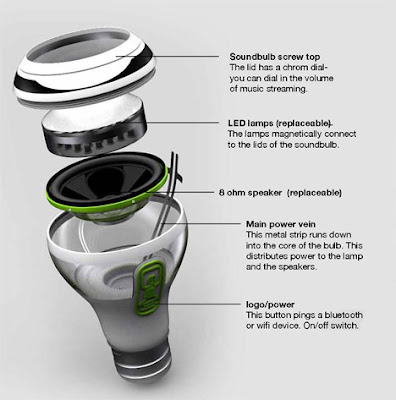
Or dematerialize (almost) the speakers...


Materialize the sound


Yet another way to embed...


Maybe not literally, but just as effective. Why not simply cloak the media?

Interactive Wind Machine


for Carlsberg; inspired by the movement of bearings in wheels and powered by wind (i think - description is all in spanish)

more images here

To follow Willow's Stereoscopic vision

Here is Carl Pisaturo's version of a 3D camera and stereoscopic vision:


Sunday, February 15, 2009

Follow-up to Jingjing and Willow's posts


It looks as if the shapes, which constitute the space, come from the Japanese Hiragana characters, (Observe closely the green colored ones) which are indeed derived from simplified Chinese characters.
The Japanese language, in written form, is basically made up of borrowed Chinese characters, and the Hiragana and Katakana characters. Above is a list of all the Hiragana and Katakana characters and their roots in Chinese characters.
The Hiragana characters alone usually do not have meanings but are rather phonetic symbols and work as letters to compose meanings or words, sometimes together Chinese characters. Because of this, I doubt if the shapes of the model would make, or be based on a narrative...

As to the curves from the Chinese garden architecture, most typically are those from those graceful residence gardens in the Yangzi-delta region, such as Suzhou and Wuxi, a couple of hundred kilometers from the city of Shanghai; whereas in northern China, they are not at all that much used, so the gardens there are rather strict and square.

The most successful “curved” garden architecture (Well, one of those anyway) is The Pavilion of Surging Waves in Suzhou (appro. 960 dc, built as privat residence of the nobility), followed by The Humble Administrator's Garden, also in Suzhou, and The Lingering Garden in Wuxi.

Stereoscopic vision

Stereo Sue

The New Yorker, 19-JUN-06

by Oliver Sacks

When Galen, in the second century, and Leonardo, thirteen centuries later, observed that the images received by the two eyes were slightly different, neither of them appreciated the full significance of these differences. It was not until the early eighteen-thirties that the English scientist and inventor Charles Wheatstone began to suspect that the disparities between the two retinal images were in fact crucial to the brain’s mysterious ability to generate a sensation of depth–and that the brain somehow fused these images automatically and unconsciously.

Wheatstone confirmed the truth of his conjecture by an experimental method as simple as it was brilliant. He made pairs of drawings of a solid object as seen from the slightly different perspectives of the two eyes, and then designed an instrument that used mirrors to insure that each eye saw only its own drawing. He called it a stereoscope, from the Greek for “solid vision.” If one looked into the stereoscope, the two flat drawings would fuse to produce a single three-dimensional drawing poised in space.

(One does not need a stereoscope to see stereo depth; it is relatively easy for most people to learn how to “free-fuse” such drawings, simply by diverging or converging the eyes. So it is strange that stereopsis was not discovered centuries before: Euclid or Archimedes could have drawn stereo diagrams in the sand, as David Hubel has remarked, and discovered stereopsis in the third century B.C. But they did not, as far as we know.)

A few years after Wheatstone’s discovery came the invention of photography, and stereophotographs, with their magical illusion of depth, became immensely popular. Queen Victoria herself was presented with a stereoscope after admiring one at the 1851 Great Exhibition, at the Crystal Palace, and soon no Victorian drawing room was complete without one. With the development of smaller, cheaper stereoscopes, easier photographic printing, and even stereo parlors, there were few people in Europe or America who did not have access to stereo viewers by the end of the nineteenth century.

With stereophotographs, viewers could see the monuments of Paris and London, or great sights of nature like Niagara Falls or the Alps, in all their majesty and depth–with an uncanny verisimilitude that made them feel as if they were hovering over the actual scenes. (By the mid-eighteen-fifties, a subspecialty of stereophotography, stereopornography, was already well established, though this was of a rather static type, because the photographic processes used at the time required lengthy exposures.)

In 1861, Oliver Wendell Holmes (who invented the popular handheld Holmes Stereo Viewer), in one of several Atlantic Monthly articles on stereoscopes, remarked on the special pleasure people seemed to derive from this magical illusion of depth:

The shutting out of surrounding objects, and the concentration of the whole attention . . . produces a dream-like exaltation . . . in which we seem to leave the body behind us and sail into one strange scene after another, like disembodied spirits.

There are, of course, many other ways of judging depth: occlusion of distant objects by closer objects, perspective (the fact that distant objects appear smaller), shading (which delineates the shape of objects), “aerial” perspective (the blurring and bluing of more distant objects by the intervening air), and, most important, motion parallax–the change of spatial relationships as we move our heads. All these cues, acting in tandem, can give a vivid sense of reality and space and depth. But the only way to actually perceive depth rather than judge it is with binocular stereoscopy.

In my boyhood home, in London, during the nineteen-thirties, we had two stereoscopes: a large, old-fashioned wooden one, which took glass slides, and a smaller, handheld one, which took cardboard stereophotographs. We also had books of bicolor anaglyphs–stereophotographs printed in different colors, which had to be viewed with a pair of red-and-green glasses that effectively restricted each eye to seeing only one of the images.

So when I developed a passion for photography, at the age of ten, I wanted, of course, to make my own pairs of stereophotos. This was easy to do, by moving the camera horizontally about two and a half inches between exposures, mimicking the distance between the two eyes. (I did not yet have a double-lens stereocamera, which would take simultaneous stereo pairs.)

I started taking pictures with greater and greater separations between them, and then, using a cardboard tube about a yard long and four little mirrors, I made a hyperstereoscope–turning myself, in effect, into a creature with eyes a yard apart. With this, I could look at even a very distant object, like the dome of St. Paul’s Cathedral, which normally appeared as a flat semicircle on the horizon, and see it in its full rotundity, projecting toward me. I also experimented with the opposite of this by making a pseudoscope (another device invented by Wheatstone), which transposed the views of the two eyes. This reversed the stereo effect to some extent, making distant objects appear closer than near ones, and turning faces into hollow masks, even though this contradicted common sense, and contradicted all the other depth cues of perspective and occlusion–a bizarre and disorienting experience as the brain struggled to reconcile two opposite conclusions, and alternated rapidly between rival hypotheses.

After the Second World War, new techniques and forms of stereoscopy became popular. The View-Master, a little stereoscope made of plastic, took reels of tiny Kodachrome transparencies that one flicked through by pressing a lever. I fell in love with faraway America at this time, partly through such View-Master reels of the grand scenery of the West and the Southwest.

One could also get Polaroid Vectographs, in which the stereo images were polarized at right angles to one another; these were viewed through a special pair of Polaroid glasses, with the polarization of the lenses also at right angles, insuring that each eye saw only its own image. Such Vectographs, unlike the red-and-green anaglyphs, could be in full color, which gave them a special appeal.

Then there were lenticular stereograms, in which the two images were printed in alternating narrow vertical bands covered by clear ridged plastic. The ridges served to transmit each set of images to the proper eye, eliminating the need for any special glasses. I first saw a lenticular stereogram just after the war, in the London Tube–an advertisement, as it happened, for Maidenform bras. I wrote to Maidenform, asking if I could have one of their advertisements, but got no reply; they must have imagined I was a sex-obsessed teen-ager, rather than a simple stereophile.

Finally, there was a slew of 3-D films (like the Madame Tussauds horror film, “House of Wax”), which one would look at through red-and-green or Polaroid glasses. As cinema, most of these were awful–but some, like “Inferno,” were very beautiful, and used stereophotography in an exquisite, delicate, unintrusive way.

Over the years, I amassed a collection of stereograms and books about stereoscopy. I am an active member of the New York Stereoscopic Society, and at their meetings I encounter other stereo buffs. Unlike most, we do not take stereoscopy for granted but revel in…

Car w an embedded driver?

What a joke!

http://www.sciam.com/video.cfm?id=1844715217

U R Embedded

And if you think more...


http://www.neurosky.com/products/mindflex/

Thinking is doing...You ARE out of your mind!!!

Thursday, February 12, 2009

curve the space

physical architectural planning and design inside architecture
using the Chinese garden language in terms of curve line
to tell a more interesting space story

Tuesday, February 10, 2009

Now that you are about getting on with the media...

Naturally embedded? Check out this:


Monday, February 9, 2009

If you would need drawings for the Central Station

I have a set of drawings for the Central Station, so if you need them, let me know.

It is about time we've got our classroom!

In a bright sunshine Monday like today, any miracle can happen…

And it did happen; now we have Studio 9 as our classroom, for almost the rest of this course. The last week, Week 13 still needs to be confirmed.

I see you there!

Sunday, February 8, 2009

Non-linear/interactive narratives

Jorge Luis Borges, The Garden of Forking Paths; a hypertext project of the novel:
http://www.geocities.com/papanagnou/index.htm

"The concept Borges described in "The Garden of Forking Paths" - in several layers of the story, but most directly in the combination book and maze of Ts'ui Pen - is that of a novel that can be read in multiple ways, a hypertext novel."

Hypertext:

"Let me introduce the word "hypertext" to mean a body of written or pictorial material interconnected in such a complex way that it could not conveniently be presented or represented on paper. It may contain summaries, or maps of its contents and their interrelations; it may contain annotations, additions and footnotes from scholars who have examined it. Let me suggest that such an object and system, properly designed and administered, could have great potential for education, increasing the student's range of choices, his sense of freedom, his motivation, and his intellectual grasp. Such a system could grow indefinitely, gradually including more and more of the world's written knowledge. However, its internal file structure would have to be built to accept growth, change and complex informational arrangements." (T. Nelson, A File Structure for the Complex, the Changing, and the Indeterminate, 1965)


"Exploratory hypertexts encourage and enable an audience (users or readers are inadequate terms here) to control the transformation of a body of information to meet its needs and interests. This transformation should include a capability to create, change and recover particular encounters as versions of the material, i.e. trails, paths, webs, notebooks, etc.[...] Ideally, an exploratory hypertext should enable its audience members to view and test alternative organizational structures of their own and, perhaps, compare their own structures of thought with hypertext and traditional ones.

The transformation of knowledge which an audience works upon an exploratory hypertext, in some important sense, parallels and rehearses the prior constructive encounter of its authors associative thought processes. In this instance, however, the word parallel is almost certainly metaphoric language and inadequate at that for a process which is sometimes orthogonal, sometimes congruent, sometimes isomorphic, but always, in some important sense, anticipatory.The authors and audience of hypertexts share a transforming interrelationship. They are, to use an overused term, co-learners. Even the most transparent exploratory hypertexts involve a shared process of mapping this interrelationship." (Michael Joyce, Siren Shapes: Exploratory and Constructive Hypertexts, 1988)

Storyspace project (unfortunately, not shareware)

Some art projects; on storytelling and city space:

http://www.nighthaunts.org.uk/
http://www.nightjam.org.uk/about.php

The other projects by Scanner: http://www.scannerdot.com/sca_001.html

MIT course on interactive and non-linear narrative

Energy consumption and pollution at airport

design brief

Energy consumption (at the Stockholm Arlanda Airport) is at the level of a small Swedish city,
equivalent to 14,000 electric heated single-family homes.
160 GWh of electricity/year –100 GWh of heating/year –25 GWh of cooling/year
- Jonas Strömberg Head of Environmental Department, LFV

To compare the energy consumption of Stockholm Arlanda Airport to something visual it helps to understand the amount of energy that is consumed, for example singe-family homes that consist approximately three persons living, so 14,00 electric heated single-family homes equals approximately half of the habitants energy use in Södermalm.

PROJECT OUTLINE
This project will concentrate on the energy levels used at the airport and aircraft. Design a communication tool to show the invisible and trough that to create a knowledge of the energy consumption. This is not aimed to claim guilt towards the passengers but to share the knowledge, so that one can compare the choices and take the actions toward a reasonable consumption. For example that one can decide to use the public transport when getting to the airport rather that a single car. This will promote the moral philosophical, utilitarianism, way of thinking, that one should weight actions based on how much good it creates towards a larger group.

GREEN TRAVELING
Stockholm Arlanda Airport has goals to become a green airport by 2012 .
Actions like renewable fuels used in airport vehicles, eco taxis and that passenger can denote money towards green choices are some already existing. I hope this project will design a discourse between environmental friendly choices and energy consumption.

To donate toward the green environment when traveling there are services like:
www.greenseat.com, www.myclimate.org, www.sustravel.co.uk, www.carbonneutral.com
These services feels very abstract as one can not see the effect right away and that there is a distance between the action and realisation of the end product.

Main goal on this project is to simplify the communication of energy use and to show the invisible energy.

EXAMPLE OF AN ARTWORK:
Artist duo HeHe’s public artwork Nuage Vert (Vihreä Pilvi). Salmisaari power plant in Helsinki was illuminated to show the current levels of electricity consumption by local residents. A laser ray traced the cloud during the night time and turn it into a city scale neon sign

pictures

DESIGN EXAMPLE:
Power aware cord by Static.


pictures

Service Thinking

Live|Work has published a manifesto on service thinking:
“We have identified three key service imperatives that must be considered if we are to create great services that make things better for people, businesses and society.

The first imperative is to put people at the heart of services. If we try to produce a service without the participation of the customer it cannot either satisfy that customer or achieve its potential. We must find ways to re-engage people in the services they use.

The second imperative is to create networks that enable services. Services have always been networks; a rail network, a telephone network, even a church service is a part of a social network. We currently have such powerful information technologies that service networks are now possible in all sectors.

The third imperative is to install sustainability as the bottom line. In this case we are talking about a triple bottom line of economic, social and environmental sustainability. We expect services to be there for us at all times – whether a phone connection or a doctors’ surgery – and we feel lost when they are not. Ultimately, Service Thinking is the ongoing consideration of how we meet our collective needs without overstretching our human and natural resources.”

In regards to the Arlanda Avairy project we were talking about, it fulfills alot of these cateogories.

It puts the user first, in looking at their own behaviour and technology they already use and are familiar with.

It taps into an existing online social network, twitter, that has an open api which allows the user to develop their own tools to follow data and information.

It is sustainable, at least in the sense that is uses existing media that has the ability to develop with technology. However, perhaps it could be more sustainable in regards to a back-up system - i.e. what if twitter goes down.. what if the flight database has errors.. etc. etc.